Red light mask vs wand: which is better for your face?
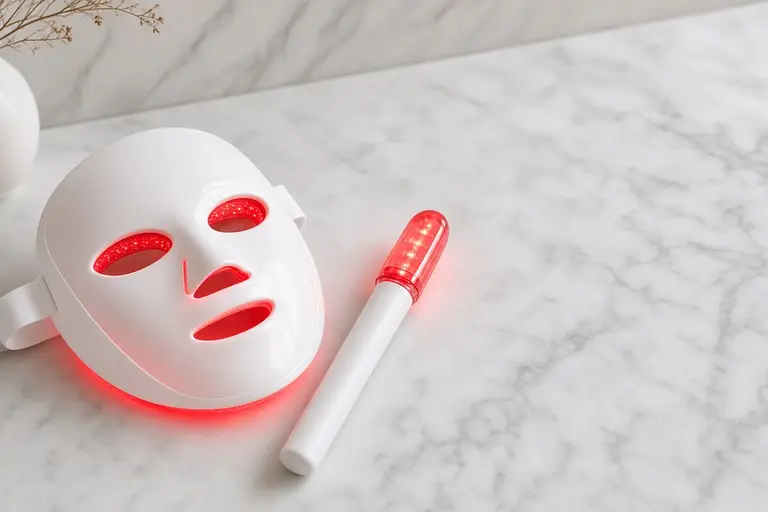
Masks and wands both bring red light to your face at home. The difference is how much they cover and how you use them. Neither is a medical treatment. Red light may help some people with the look of their skin, research is still developing, and results vary.
Talk to your doctor before you start, especially if you are pregnant, take photosensitizing medication, have a skin condition, or have an eye condition. See safety and contraindications.
Face mask: whole face, hands-free
A mask straps on and covers your forehead, cheeks and chin at the same time. You set a timer and sit still.
- Good for: an even, whole-face session with little effort.
- Watch for: fit, weight, and eye protection. Masks cost more and are often final sale.
Handheld wand: small areas, more control
A wand is a small device you move over one area at a time, such as around the eyes. Some combine light with warmth, vibration or microcurrent.
- Good for: targeting small areas, travel, a lower price.
- Watch for: sessions take your attention, coverage depends on you, and the extras (warmth, microcurrent) bring their own instructions and cautions. Microcurrent devices aren't suitable for everyone, including people with pacemakers or other implanted devices. Ask your doctor.
Quick way to decide
- Want the whole face, hands-free? Look at a mask. Start with best face masks.
- Want one small area, or something for travel? A wand may suit you better.
- Comparing a specific brand? Our ROSSO mask review lists the specs of both ROSSO's mask and its eye wand.
Eye safety
Face devices sit close to your eyes, so this matters more than with a pad or belt. Never look straight into the LEDs. Use the eye shields or inserts the maker supplies and keep your eyes closed during a session. Blue light settings (around 450 nm) deserve extra care around the eyes. If you have an eye condition, take medication that affects your eyes, or have had eye surgery, ask an eye doctor before using any face device. Stop if your eyes feel uncomfortable or your vision changes.
We may earn a commission if you buy through links on this page, at no extra cost to you. It never changes what we say. How we make money.
| Face mask | Handheld wand | |
|---|---|---|
| Coverage | The whole face at once | One small area at a time |
| Hands-free? | Yes, strapped on | No, you move it yourself |
| Eye protection | Use the eye shields or inserts the maker supplies | Keep the light off your eyes; follow the manual |
| Session style | Set a timer and sit still | Short, targeted passes |
| Extras on some models | Several light modes, timers | Warmth, vibration or microcurrent |