Red light therapy belt reviews: what to check
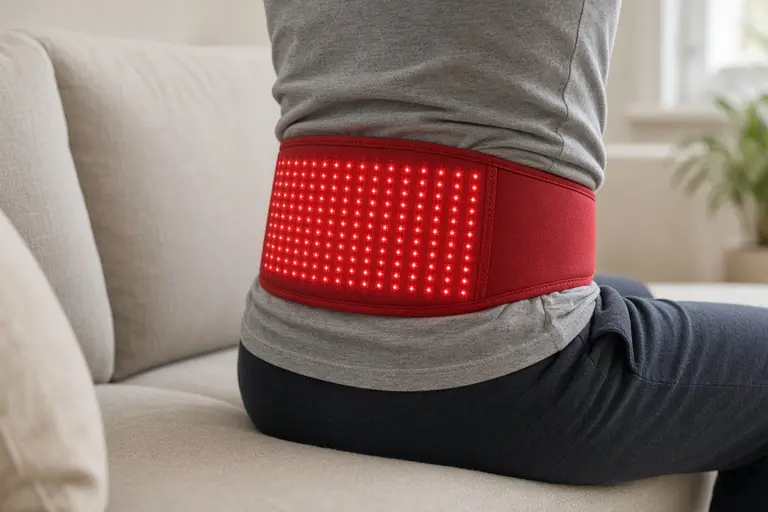
A red light therapy belt is a wearable band of LEDs for the waist or lower back. Belts are popular because you can wear one while you sit, work or move around. Reviews online vary a lot, so here's how to judge them, and what to check yourself.
Talk to your doctor before you start, especially if you are pregnant, take photosensitizing medication, or have a skin or eye condition. See safety and contraindications.
Reading belt reviews
- Look for specifics. Useful reviews mention the fit, the battery life, how warm it gets and how easy the controls are.
- Be careful with health claims. A reviewer's experience is not evidence that a belt will help you. Research is still developing, and results vary.
- Check who wrote it. Brand pages and affiliate sites (including this one) have an interest. We say so; look for others that do too.
What to check in a belt
The table below lists the practical checks. In short: listed wavelengths, a power figure with a stated measuring distance, a fit range that suits you, a timer, and a warranty and return window you're comfortable with.
Using a belt safely
Follow the maker's session length. Don't sleep in it, don't use it over broken or numb skin, and don't use it on your abdomen if you're pregnant. If it feels too warm, stop.
We may earn a commission if you buy through links on this page, at no extra cost to you. It never changes what we say. How we make money.
| Check | Why it matters |
|---|---|
| Wavelengths listed (e.g. red and near-infrared) | Lets you compare like with like |
| Irradiance stated at a distance, ideally third-party tested | Brand numbers vary in how they are measured |
| Fit range and strap length | A belt that slips covers less area |
| Battery or cable, and auto shut-off timer | Convenience and safety |
| Warranty and return window | You can test it at home |